
Review our checklist
Prepare for your donation


Eligibility requirements
All blood types welcome!
DONORS MUST:
 Be feeling well and pass our medical exam.
All individuals must pass two separate medical examinations, a medical history screening and testing for transmissible viruses, before their donated plasma can be used to manufacture plasma protein therapies.
 Be between the ages of 18 and 65.
Generally, plasma donors must be 18 years of age or older. B Positive restricts the age of donors to 65 or younger to avoid any complications that can arise in older donors.
 Weigh between 110 and 400 lbs.
Generally, plasma donors must weigh at least 110 pounds (50kg). B Positive restricts the weight of donors to 400lbs avoid any complications that can arise in heavier donors.
 Live near their B Positive Plasma center — within 50 miles of our centers.
Plasma Donors are required to live within a 50 mile radius of their chosen plasma donation center.
 Possess the proper documents listed in the “remember to bring” checklist.
Plasma Donors are required to bring proper identification documentation upon their first visit:
- Unexpired photo ID
- Proof of Social Security Number
- Proof of current address
For more information on what to expect for your first donation, check out our FAQs.
Remember to bring
 Unexpired photo ID
This can include a driver's license, state-issued identification, passport or military ID. If you're a student, you can bring a school ID and a copy of your birth certificate that verifies your birth date.
 Proof of Social Security Number
Proof of social security number, such as a social security card, W-2 form, or paystub. The name on this document must match your ID exactly.
 Proof of current address
If your driver's license or photo ID lists your address – this works! If not, you can show a W-2 or paycheck stub with your current address, or a recent utility bill (within 30 days). You can even bring a copy of your current lease.
We cannot accept copies of photo ID - see the FAQs for full details.
For more information on what to expect for your first donation, check out our FAQs.


Prepare to donate
Your blood is made up of four main components: red blood cells, white blood cells, platelets, and plasma. Plasma is the yellow, liquid portion of your blood that serves as the carrier for cells and other blood components. Plasma is the liquid portion of your blood and primarily composed of water. Blood plasma is collected for its dissolved proteins, clotting factors, and various antibodies to create life-saving medical therapies.
Your blood is made up of four main components: red blood cells, white blood cells, platelets, and plasma. Plasma is the yellow, liquid portion of your blood that serves as the carrier for cells and other blood components. Plasma is the liquid portion of your blood and primarily composed of water. Blood plasma is collected for its dissolved proteins, clotting factors, and various antibodies to create life-saving medical therapies.
Your blood is made up of four main components: red blood cells, white blood cells, platelets, and plasma. Plasma is the yellow, liquid portion of your blood that serves as the carrier for cells and other blood components. Plasma is the liquid portion of your blood and primarily composed of water. Blood plasma is collected for its dissolved proteins, clotting factors, and various antibodies to create life-saving medical therapies.
Your blood is made up of four main components: red blood cells, white blood cells, platelets, and plasma. Plasma is the yellow, liquid portion of your blood that serves as the carrier for cells and other blood components. Plasma is the liquid portion of your blood and primarily composed of water. Blood plasma is collected for its dissolved proteins, clotting factors, and various antibodies to create life-saving medical therapies.
Your blood is made up of four main components: red blood cells, white blood cells, platelets, and plasma. Plasma is the yellow, liquid portion of your blood that serves as the carrier for cells and other blood components. Plasma is the liquid portion of your blood and primarily composed of water. Blood plasma is collected for its dissolved proteins, clotting factors, and various antibodies to create life-saving medical therapies.
*Donors will not be compensated for fatty donations of plasma.
What to expect for your first donation
 A center team member will greet you at the reception desk and get you started on the initial paperwork
Your blood is made up of four main components: red blood cells, white blood cells, platelets, and plasma. Plasma is the yellow, liquid portion of your blood that serves as the carrier for cells and other blood components. Plasma is the liquid portion of your blood and primarily composed of water. Blood plasma is collected for its dissolved proteins, clotting factors, and various antibodies to create life-saving medical therapies.
 They will also check the required documents you brought with you to make sure everything is in order.
Your blood is made up of four main components: red blood cells, white blood cells, platelets, and plasma. Plasma is the yellow, liquid portion of your blood that serves as the carrier for cells and other blood components. Plasma is the liquid portion of your blood and primarily composed of water. Blood plasma is collected for its dissolved proteins, clotting factors, and various antibodies to create life-saving medical therapies.
 A trained B Positive Plasma center team member checks your vital signs and takes a blood sample.
Your blood is made up of four main components: red blood cells, white blood cells, platelets, and plasma. Plasma is the yellow, liquid portion of your blood that serves as the carrier for cells and other blood components. Plasma is the liquid portion of your blood and primarily composed of water. Blood plasma is collected for its dissolved proteins, clotting factors, and various antibodies to create life-saving medical therapies.
 You’ll also meet with a certified medical professional who’ll ask you questions and conduct a physical in a private exam room.
Your blood is made up of four main components: red blood cells, white blood cells, platelets, and plasma. Plasma is the yellow, liquid portion of your blood that serves as the carrier for cells and other blood components. Plasma is the liquid portion of your blood and primarily composed of water. Blood plasma is collected for its dissolved proteins, clotting factors, and various antibodies to create life-saving medical therapies.
 One of our highly trained phlebotomists (aka, medical technicians trained in drawing blood) guides you to a sanitized donor bed on the donor floor.
Your blood is made up of four main components: red blood cells, white blood cells, platelets, and plasma. Plasma is the yellow, liquid portion of your blood that serves as the carrier for cells and other blood components. Plasma is the liquid portion of your blood and primarily composed of water. Blood plasma is collected for its dissolved proteins, clotting factors, and various antibodies to create life-saving medical therapies.


Donatation tips
 You get free wifi so bring a tablet or laptop if you have one
Your blood is made up of four main components: red blood cells, white blood cells, platelets, and plasma. Plasma is the yellow, liquid portion of your blood that serves as the carrier for cells and other blood components. Plasma is the liquid portion of your blood and primarily composed of water. Blood plasma is collected for its dissolved proteins, clotting factors, and various antibodies to create life-saving medical therapies.
Your blood is made up of four main components: red blood cells, white blood cells, platelets, and plasma. Plasma is the yellow, liquid portion of your blood that serves as the carrier for cells and other blood components. Plasma is the liquid portion of your blood and primarily composed of water. Blood plasma is collected for its dissolved proteins, clotting factors, and various antibodies to create life-saving medical therapies.
Your blood is made up of four main components: red blood cells, white blood cells, platelets, and plasma. Plasma is the yellow, liquid portion of your blood that serves as the carrier for cells and other blood components. Plasma is the liquid portion of your blood and primarily composed of water. Blood plasma is collected for its dissolved proteins, clotting factors, and various antibodies to create life-saving medical therapies.
Payment details
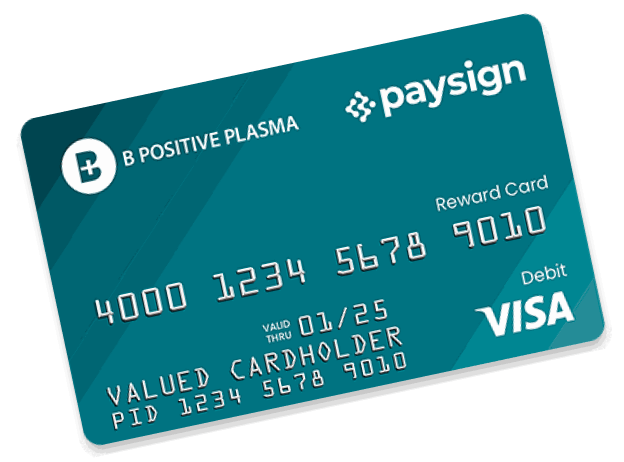
 Payments are made on a reloadable prepaid card.
Your blood is made up of four main components: red blood cells, white blood cells, platelets, and plasma. Plasma is the yellow, liquid portion of your blood that serves as the carrier for cells and other blood components. Plasma is the liquid portion of your blood and primarily composed of water. Blood plasma is collected for its dissolved proteins, clotting factors, and various antibodies to create life-saving medical therapies.
 Eligible, qualified new donors can get up to $1,000 their first month*. Fees and programs vary by location; please contact your preferred B Positive Plasma center for more information.
Your blood is made up of four main components: red blood cells, white blood cells, platelets, and plasma. Plasma is the yellow, liquid portion of your blood that serves as the carrier for cells and other blood components. Plasma is the liquid portion of your blood and primarily composed of water. Blood plasma is collected for its dissolved proteins, clotting factors, and various antibodies to create life-saving medical therapies.
 U.S. FDA regulations state that the maximum frequency of donation is once in two-day period, and no more than twice in a seven day period.
Your blood is made up of four main components: red blood cells, white blood cells, platelets, and plasma. Plasma is the yellow, liquid portion of your blood that serves as the carrier for cells and other blood components. Plasma is the liquid portion of your blood and primarily composed of water. Blood plasma is collected for its dissolved proteins, clotting factors, and various antibodies to create life-saving medical therapies.

A B Positive National Blood Services® Company | © 2022 B Positive Plasma LLC, All Rights Reserved